Chemex Brew Guide
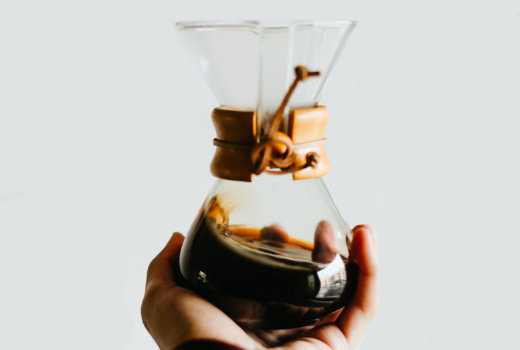
Invented in 1941, the Chemex proudly sits on display at the Museum Of Modern Art in New York. Here at Clements & Hope we think it really is a work of art too and it’s guaranteed to make perfect coffee every time. Want to have a go yourself? Follow our step by step instructions to have a go yourself.
What do you need to brew coffee with a Chemex?
To brew coffee with a Chemex you are going to need the following items:
- Chemex Brewer
- Chemex Filter Paper
- Medium Ground Coffee
- Pouring Kettle
- Scales
- Timer
- Stirrer
Step by step Chemex brew guide:
- Boil your kettle and let it rest for a minute or two until the water temperature drops to around 90°c.
- Place the filter paper into the Chemex making sure the three layered side is aligned with the pouring spout.
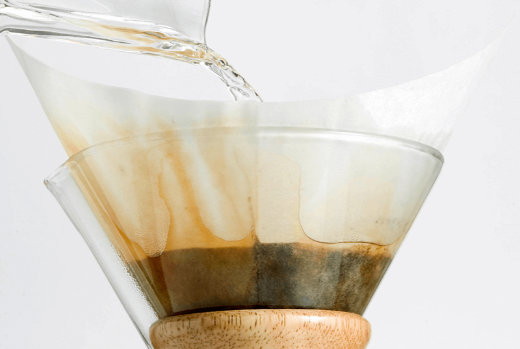
- Pour hot water inside the filter to help seal it and remove any papery taste. Hold the paper in place and discard the rinse water.
- Weigh out 32g of coffee and add to the Chemex, shake gently to even out the grounds.
- Place the Chemex on the scales and set to zero.
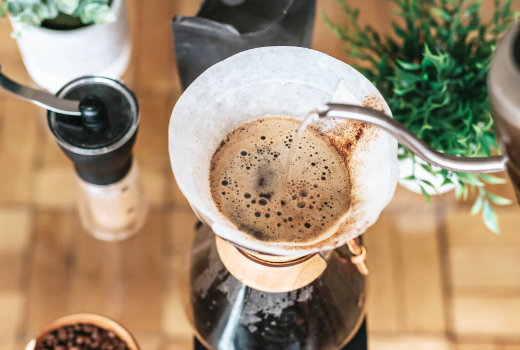
- Start the timer and slowly pour around 70ml of water onto the coffee surface - try to avoid pouring down the sides of the filter paper. Once all grounds are saturated in the water, allow the coffee around 30 seconds to 'bloom'.
- Pour the remainder of the water in a spiral motion until the scales read 600ml - if you can, try to pour continuously.
- If the water gets too high in the filter, stop for a moment to let it drain through. The water should take around 3-4 minutes for all of the water to drain through the filter completely.
- Once all of the water has drained into the Chemex, carefully remove and discard the filter paper.
- Give the Chemex a quick swirl before pouring, enjoy.